LLM SEO: How to Get Your Brand Cited by Large Language Models
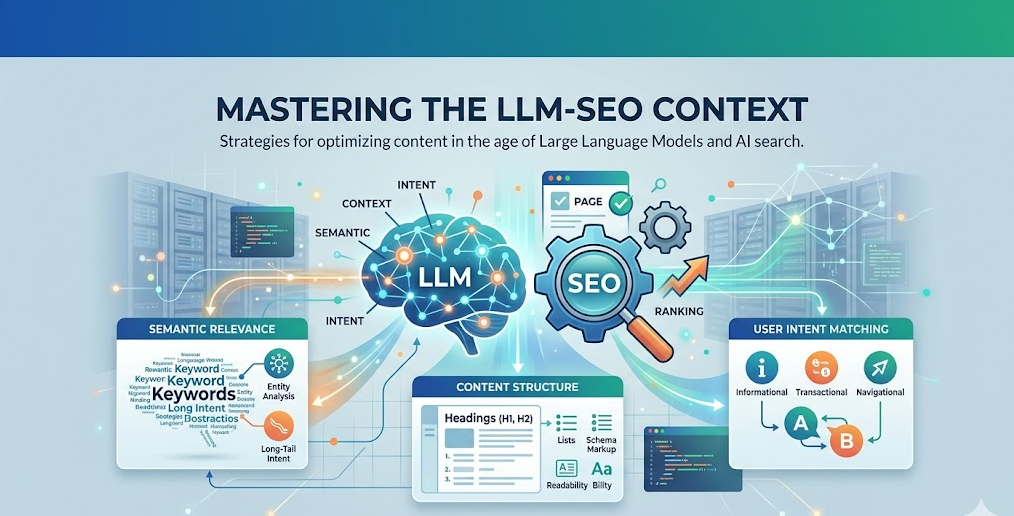
LLM SEO is the practice of optimizing your brand to appear in responses from large language models like ChatGPT, Claude, Gemini, and Perplexity. It focuses on entity authority, citation signals, and structured content - not keyword density. It is closely related to GEO and AI SEO.
What is LLM SEO?
LLMs do not rank pages like Google does. They generate answers by drawing from training data and live web retrieval. LLM SEO is about making your brand part of that data - through third-party citations, entity clarity, and content AI can extract and quote.
When a user asks Claude "what is the best invoicing tool for freelancers" or asks ChatGPT "which AI visibility platform should I use," the LLM synthesizes an answer from what it knows about the landscape. LLM SEO is the discipline of making sure your brand is in that synthesis - accurately described, reliably cited, and clearly positioned.
The distinction from traditional SEO is fundamental. You are not optimizing for a ranking algorithm that counts backlinks and keyword matches. You are optimizing for an AI system that needs to trust your brand enough to recommend it to a user who is looking for exactly what you offer.
How LLMs Decide What to Cite
1. Training data coverage
LLMs like ChatGPT and Claude were trained on large corpora of text from the web. If your brand was mentioned in sources included in that training data - Wikipedia, major publications, G2 reviews, ProductHunt listings, Hacker News discussions - the model has some base knowledge of you. Brands with stronger training data coverage start with a higher baseline citation rate.
2. Live web retrieval
Perplexity, Google AI Overview, and increasingly ChatGPT with search enabled pull from the live web. For these platforms, your current web presence matters as much as historical training data. Fresh content, crawlable pages, and an llms.txt file help AI crawlers index and cite your brand accurately.
3. Entity authority
LLMs weight mentions from authoritative independent sources more than content on your own website. A G2 listing, a Crunchbase profile, a mention in a TechCrunch article, or inclusion in a Product Hunt "tools for X" collection each add to your entity authority. Learn more about how AI citation works and which sources have the highest impact.
4. Content extractability
AI models extract and quote content that works as a standalone answer. If your pages bury the main point after lengthy preamble, the model skips your content and cites a competitor whose first sentence is a direct answer. The fix is writing answer-first: lead with a clear statement of what your product does and who it serves.
LLM SEO vs GEO vs Traditional SEO
| Traditional SEO | GEO | LLM SEO | |
|---|---|---|---|
| Target | AI chatbots | LLM training + retrieval | |
| Signal | Backlinks | Entity + citation | Training data + authority |
| Metric | Rank position | Citation share | Mention frequency |
| Tools | Ahrefs, SEMrush | GeoIQ | GeoIQ |
4 LLM SEO Tactics That Work in 2026
1. Get listed on sources LLMs trust
G2, Crunchbase, ProductHunt, and Wikipedia (if eligible) are high-authority sources that appear repeatedly in LLM training data and that Perplexity and Google actively index. A complete, accurate listing on each of these sources has more LLM SEO impact than most content you could publish on your own site. Also pursue mentions in industry publications, tech media, and relevant community forums.
2. Write quotable content
Direct sentences that stand alone without surrounding context. "Acme is a project management tool for remote engineering teams" is quotable. "We built Acme because we believed there had to be a better way..." is not. Review your homepage and key landing pages and rewrite any paragraph that buries its point. The first sentence of every section should be a complete, self-contained statement.
3. Add llms.txt to your domain root
An llms.txt file gives AI systems a structured, human-readable summary of your brand - what you do, who you serve, your key products, and links to your most important pages. It takes under an hour to write and has immediate impact on how AI systems understand and describe your brand. If you want a starting point, see llms.txt examples for different industries.
4. Allow AI crawlers in robots.txt
Many sites accidentally block AI crawlers with overly broad robots.txt rules. Verify that GPTBot, ClaudeBot, PerplexityBot, anthropic-ai, and Google-Extended are all allowed to crawl your site. Blocking these crawlers means your content never enters the retrieval pipeline for live-web AI search platforms.
Platform-Specific Guides
Each LLM platform has slightly different citation mechanics. For deeper guidance on specific platforms, see rank in ChatGPT, Claude SEO, and Gemini SEO.
How to Measure LLM SEO Progress
Track your brand mention rate across ChatGPT, Gemini, and Perplexity weekly. Manual tracking is time-consuming and inconsistent - the prompts, phrasing, and platforms vary too much for a spreadsheet to capture reliably. GeoIQ does this automatically: it queries six AI platforms with category-specific prompts, records your citation rate, and tracks it over time so you can see whether your LLM SEO work is moving the number.
Check your LLM visibility score for free
No signup. No credit card. See your citation rate across ChatGPT, Perplexity, Gemini, Claude, and Grok in 60 seconds.
Run free LLM SEO auditFrequently Asked Questions
What is LLM SEO?
LLM SEO is the practice of optimizing your brand to appear in responses from large language models like ChatGPT, Claude, Gemini, and Perplexity. It focuses on entity authority, citation signals, and answer-first content - not keyword density or backlink volume.
How is LLM SEO different from GEO?
LLM SEO and GEO cover the same goal. LLM SEO refers specifically to optimization for large language model citation. GEO is the broader term covering all generative AI platforms. In practice, the strategies are identical.
Which LLMs should I optimize for?
Start with ChatGPT and Perplexity - highest query volumes for product research. Claude is third and growing fast. Gemini and Grok are worth tracking but lower priority for most brands initially.
What content format works best for LLM citation?
Direct, standalone sentences that answer a specific question without needing surrounding context. Lead with the main point in your first sentence. Keep sentences under 25 words. Avoid filler phrases and jargon. Think of each paragraph as something the AI could quote verbatim.
How do I know if LLMs are citing my brand?
Run a free GeoIQ audit. It queries six AI platforms with prompts relevant to your category and shows your citation rate, what competitors are being recommended instead of you, and a prioritized fix list.
Does LLM SEO replace traditional SEO?
No - they complement each other. Google search traffic is still significant. LLM SEO covers the growing share of product discovery happening in AI chatbots. Many LLM SEO tactics also help traditional SEO.
How long does LLM SEO take?
For Perplexity and Google AI Overview (live web), 4-8 weeks for meaningful improvement. For ChatGPT and Claude (training data), 3-6 months depending on model update cycles. Technical fixes take effect immediately after AI crawlers re-index your site.